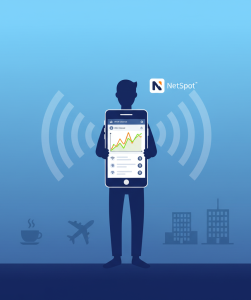
In today's hyper-connected world, being without internet seems almost unthinkable. Whether for remote work, studying, browsing social media, or simply finding your way around an unfamiliar city, connectivity is essential. However, mobile data plans can be expensive and limited, especially during international travel. It is in this context that the fundamental question arises for many: How to find free Wi-Fi networks using an app. How can you do this safely and efficiently? The answer might be in the palm of your hand, in a... application which transformed the search for connectivity into a collaborative and global experience: the Wi-Fi Map.
This comprehensive guide is dedicated to exploring every facet of Wi-Fi Map, a powerful tool that stands out as one of the most robust solutions for those who want to find free internet in virtually any corner of the planet. Throughout this article, We're going to unveil not only how it works, but also its hidden features, security tips, and a detailed step-by-step guide so you can get the most out of this platform. So, if you're tired of spending a fortune on mobile data or begging for passwords in cafes, keep reading and discover how free connectivity is closer than you think.
What is Wi-Fi Map and how does it work?
First and foremost, it's crucial to understand the genius behind Wi-Fi Map. Launched in 2014, the app isn't just a network locator; it is, at its core, the world's largest global Wi-Fi sharing community. The premise is simple and powerful: users from all over the world add and update Wi-Fi access points, including their passwords, on an interactive map. Consequently, this collaborative database already exceeds 150 million hotspots, a number that grows every day.
The operation is based on the principle of crowdsourcing. Imagine you're in a restaurant and you get the Wi-Fi password. You can voluntarily open Wi-Fi Map and add that network with its password so that other users in the community can access it in the future. Similarly, when you need a connection, simply open the app to see all the access points shared by other people around you.
This community-based approach solves one of the biggest problems in finding Wi-Fi: the need for passwords. Furthermore, the app frequently includes helpful tips left by other users, such as "the password is the phone number on the wall" or "strongest signal near the window." In this way, Wi-Fi Map transforms the often frustrating task of hunting for a connection into a simple, straightforward, and incredibly effective experience.

WiFi Map・Password, Internet, eSIM
Android
Key Features of Wi-Fi Map That You Need to Know
Wi-Fi Map has evolved significantly since its launch and today offers a complete ecosystem of connectivity tools. While its flagship feature is the search for free networks, its additional functionalities make it a true Swiss Army knife for any traveler or digital nomad.
Interactive Access Point Map
The heart of the app is undoubtedly its interactive map. Upon opening it, your location is identified via GPS, and the map displays icons representing all nearby Wi-Fi hotspots. Networks are generally color-coded or symbolized to indicate whether they are public, private with a shared password, or belonging to commercial establishments. With just one tap, you can see the network name, the distance to it, and, most importantly, access details such as the password. Furthermore, the interface allows you to filter results, making it easy to search for specific types of locations, such as cafes, airports, or libraries.
Passwords and Community Tips
As mentioned, the strength of Wi-Fi Map lies in its community. For each access point, there is a section where users can add and verify passwords. If a password worked for you, you can confirm it with a positive vote, helping to keep the database relevant and up-to-date. Conversely, if a password is incorrect, you can flag it. This continuous feedback system ensures that the information is as accurate as possible, although, as with any collaborative system, outdated passwords can occasionally be a problem.
Offline Functionality: Connection Without Internet
This is perhaps the most valuable feature for travelers. What happens when you arrive in a new country and don't have a data plan to open an app and search for Wi-Fi? Wi-Fi Map solves this with its offline maps. Before your trip, you can download the Wi-Fi map of an entire city or country. Then, upon arriving at your destination, even without a 3G/4G/5G connection, you can open the app and navigate the offline map to find the nearest hotspots, guided by your phone's GPS. This feature is a real lifesaver and a clear example of... How to find free Wi-Fi networks using an app. in a planned and intelligent way.
Integrated Speed Test
Finding a Wi-Fi network is only half the battle; the other half is ensuring it's fast enough for your needs. Connecting to a network is pointless if it can barely load a webpage. With this in mind, Wi-Fi Map includes a speed test tool. After connecting to a network found by the app, you can run a test to check download speeds, upload speeds, and latency (ping). Consequently, this helps you decide whether it's worth staying in that location for an important video call or for a large upload.
Secure VPN for Protected Browsing
Security is a primary concern when using public Wi-Fi networks, which are notoriously vulnerable to data interception attacks. Wi-Fi Map addresses this issue by offering an integrated VPN (Virtual Private Network) service. By activating the VPN, all your internet traffic is encrypted and routed through a secure server, making it virtually impossible for hackers or eavesdroppers on the same network to monitor your activity. While the VPN service is a premium (paid) feature, it adds an essential layer of security for those who need to conduct banking transactions or handle sensitive information on open networks.
eSIM: Global Mobile Data
Expanding its scope even further, Wi-Fi Map now offers an eSIM service. An eSIM is a digital chip that allows you to activate a mobile data plan without the need for a physical SIM card. Through the app, you can purchase data packages for over 70 countries directly on your mobile phone (provided it is compatible with the technology). This functionality positions Wi-Fi Map not only as a tool for finding free Wi-Fi, but as a complete global connectivity solution, offering a convenient alternative to expensive international roaming plans.
Step-by-Step: How to Use Wi-Fi Map to Find Free Wi-Fi
Using Wi-Fi Map is a fairly intuitive process. If you're wondering... How to find free Wi-Fi networks using an app. In practice, follow these simple steps:
- Download and Installation: First, download the Wi-Fi Map app from the Google Play Store (Android) or the App Store (iOS). Installation is quick and the app is free to download, although it offers a Pro version without ads and with extra features.
- Initial Permissions: When you open the app for the first time, it will ask for permission to access your location. Granting this permission is essential so that it can show you nearby Wi-Fi hotspots.
- Explore the Map: Immediately, the main map will be displayed, showing your location and nearby hotspots. You can navigate the map by dragging your finger or use the search function to find a specific area.
- Select an Access Point: Tap one of the Wi-Fi icons on the map. A small window will appear with the network name and, in some cases, the distance. Tap again to see the full details.
- Get the Password: On the details screen, you will see the “Show Password” option. Tapping it will reveal the password shared by the community. You can easily copy it to the clipboard.
- Connect to the Network: Now, go to your smartphone's Wi-Fi settings, find the network in the list of available networks, select it, and paste the password you copied.
- Contribute to the Community (Optional): After successfully connecting, you can return to the app and confirm that the password worked. If you find a new network or an updated password, consider adding it to help other users.
Advantages and Disadvantages of Wi-Fi Map
No tool is perfect. To provide a complete analysis, it's important to weigh the pros and cons of Wi-Fi Map.
Advantages: Why does Wi-Fi Map stand out?
- Huge Database: With over 150 million hotspots, it is the largest network of its kind in the world.
- Offline Functionality: The ability to download maps is a crucial advantage for international travel.
- Intuitive Interface: The app is easy to use, even for users with less technological experience.
- Additional Resources: The inclusion of speed testing, VPN, and eSIM makes it a complete connectivity solution.
- Active Community: The collaborative nature ensures that new networks are constantly being added.
Disadvantages and Precautions to Be Taken
- Outdated Passwords: Because it depends on the community, some passwords may be incorrect or outdated.
- Security Risks: Connecting to unfamiliar public networks always carries security risks. Using the built-in VPN (which is a paid feature) is highly recommended.
- Advertisements in the Free Version: The free version of the app displays ads, which may be annoying for some users.
- Connection Quality: The app shows where the Wi-Fi is located, but it cannot guarantee the quality or speed of the connection.
Is Wi-Fi Map Safe? Tips for Protecting Yourself on Public Networks
The question about security is perhaps the most important. The Wi-Fi Map app itself is secure. It doesn't hack networks; it simply functions as a repository of voluntarily shared passwords. The risk lies not in the app, but in the nature of the public Wi-Fi networks it provides access to.
Therefore, when using Wi-Fi Map or any other way to connect to a public network, follow these security tips to protect your data:
- Always use a VPN: If you plan on doing more than just browsing, activate a VPN. This encrypts your data, protecting it from prying eyes.
- Avoid Sensitive Transactions: Avoid accessing your bank account, making online purchases, or entering important passwords while on a public network, even with a VPN.
- Check the “HTTPS”: When browsing the web, make sure the websites you visit use the protocol.
HTTPS(The padlock next to the address in the browser). This indicates that your connection to that specific website is encrypted. - Keep your software up to date: Make sure your device's operating system and applications (especially your browser and antivirus) are always updated with the latest security patches.
- Disable File Sharing: Make sure your device's file and printer sharing options are disabled to prevent others on the same network from accessing your files.

Conclusion: The Key to Universal Connectivity
In a world that demands constant connectivity, Wi-Fi Map establishes itself not only as a useful tool, but as an indispensable travel companion. It democratizes internet access, transforming it into a globally shared and accessible resource. The platform brilliantly demonstrates this. How to find free Wi-Fi networks using an app. It can be a practical, safe, and efficient reality, provided the user takes the necessary precautions.
By combining a gigantic collaborative map with essential features like offline access, speed testing, and an extra layer of security via VPN, Wi-Fi Map goes beyond being a simple password finder. It becomes a complete solution for the global citizen, the budget-conscious student, the digital nomad, and anyone who values the freedom of always being connected without having to worry about exorbitant mobile data costs. The next time the 4G icon disappears, remember that a community of millions of people may have already shared the key to your next connection.